About l-isoleucine
l-isoleucine
Name L-Isoleucine
Synonyms (2S,3S)-2-Amino-3-methylpentanoic acid; Ile
copyRight
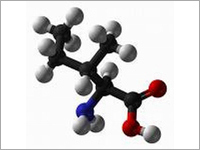
Molecular Structure L-Isoleucine, (2S,3S)-2-Amino-3-methylpentanoic acid, Ile, CAS #: 73-32-5
Molecular Formula C6H13NO2
Molecular Weight 131.17
CAS Registry Number 73-32-5
EINECS 200-798-2
Valine (abbreviated as Val or V)[1] is an -amino acid with the chemical formula HO2CCH(NH2)CH(CH3)2. L-Valine is one of 20 proteogenic amino acids. Its codons are GUU, GUC, GUA, and GUG. This essential amino acid is classified as nonpolar. Along with leucine and isoleucine, valine is a branched-chain amino acid. It is named after the plant valerian. In sickle-cell disease, valine substitutes for the hydrophilic amino acid glutamic acid in hemoglobin. Because valine is hydrophobic, the hemoglobin does not fold correctly.
| Product name | L-Isoleucine |
| Test item | Speficication (FCCIV) |
| Melting point | 168-170 C |
| Sublimation | 168-170 C |
| alpha | 41 (c=4, 6N HCl) |
| Water solubility | 41.2 g/L (50 C) |
| pH of a 1 in 100 Solution. | .5.5-7.0 |
| Chromatographic Purity | To pass test |
| Loss on Drying | 0.3% |
Essential Amino Acid for Vital FunctionsL-Isoleucine plays a pivotal role in human health as one of the essential amino acids necessary for muscle growth, tissue repair, and energy regulation. Its high purity and quality make it ideal for use in nutritional supplements, medicinal products, and fortified foods, ensuring your formulations benefit from reliable and bioavailable amino acid content.
High Standards for Versatile ApplicationsSourced through advanced fermentation or chemical synthesis processes, L-isoleucine is crafted to meet the needs of pharmaceutical, food, and feed industries. Its white crystalline appearance, stable molecular structure, and excellent water solubility provide versatility, making it easy to incorporate into a variety of product formulations without compromising performance or safety.
FAQs of l-isoleucine:
Q: How is L-isoleucine produced for industrial use?
A: L-isoleucine is produced via advanced fermentation of microorganisms or by chemical synthesis. Both methods ensure a high purity level (minimum 99%), delivering a quality product suitable for food, pharmaceutical, and feed applications.
Q: What are the main uses of L-isoleucine in different industries?
A: L-isoleucine serves as a crucial ingredient in pharmaceuticals to support muscle metabolism and recovery, as a food additive to enrich protein content in nutrition products, and as a feed additive to enhance livestock growth and well-being.
Q: When should L-isoleucine be incorporated into product formulations?
A: L-isoleucine is typically included when there is a need to boost the amino acid profile in clinical, nutritional, or animal feed products, especially to promote tissue repair, muscle development, or overall metabolic support.
Q: Where is L-isoleucine commonly sourced and manufactured?
A: This amino acid is extensively produced and supplied by leading manufacturers and exporters in India, delivering quality products for global markets under food and pharmaceutical grades.
Q: What is the benefit of using high-purity, pharmaceutical-grade L-isoleucine?
A: High-purity, pharmaceutical-grade L-isoleucine ensures minimal contaminants and maximum efficacy, which is crucial for clinical and food applications where product safety and effectiveness are paramount.
Q: How should L-isoleucine be handled when added to food or supplements?
A: L-isoleucines white crystalline powder form is odorless and slightly bitter, and is easily dissolved in water. It should be handled in clean, controlled conditions to preserve its quality and functionality in end products.







 Send Inquiry


 Send Inquiry
 Send Inquiry