Back to top
L-Lysine
L-Lysine

L-Lysine

L-Lysine Specification

  • Molecular Weight
  • 182.65 g/mol
  • HS Code
  • 29224100
  • Structural Formula
  • NH2(CH2)4CH(NH2)COOHHCl
  • Taste
  • Slightly Sweet
  • Molecular Formula
  • C6H14N2O2HCl
  • Refractive Rate
  • Not Available
  • Smell
  • Odorless
  • Boiling point
  • Not Available
  • Classification
  • Amino Acid
  • Grade
  • Feed Grade, Food Grade
  • Purity
  • 99% Min
  • Application
  • Food Additive, Feed Additive, Pharmaceutical
  • Appearance
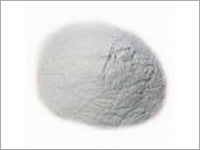
  • White Crystalline Powder
  • Melting Point
  • 263C (decomposes)
  • Density
  • Gram per cubic centimeter(g/cm3)
  • Solubility
  • Freely soluble in water
  • Raw Material
  • Corn, Starch


About L-Lysine

Name: L-Lysine HCl; L-Lysine hydrochloride

Synonyms: (S)-2,6-Diaminohexanoic acid monohydrochloride

Molecular Formula: C6H14N2O2·HCl

Molecular Weight: 182.65

CAS Number: 10098-89-2

EINECS: 233-234-9


L-Lysine is a necessary building block for all protein in the body. L-Lysine plays a major role in calcium absorption; building muscle protein; recovering from surgery or sports injuries; and the body's production of hormones, enzymes, and antibodies.


L-Lysine HCl (AJI92)

Item

Specification

Appearance

White powder

Specific rotation []D20

+20.7o ~ +21.5o

Chloride (Cl)

19.12 ~ 19.51%

Ammonium (NH4)

0.020% Max.

Sulfate (SO4)

0.020% Max.

Iron (Fe)

10ppm Max.

Heavy metals (Pb)

10ppm Max.

Arsenic (As2O3)

1ppm Max.

Other Amino Acids

Meets the requirements

Loss on drying

0.40% Max.

Residue on ignition

0.10% Max.

Assay

99.0 ~ 100.5%

pH

5.0 ~ 6.0

Pyrogen

Free


L-Lysine HCl (USP24)

Item

Specification

Description

White granular powder

Identification

Matches standard

Foreign materials

5spots Max.

Assay

98.5 ~ 101.5%

Specific optical rotation[]D20

+20.5o ~ +21.4o

Heavy metals (Pb)

15ppm Max.

Loss on drying

0.4% Max.

Residue on ignition

0.1% Max.

Chloride (Cl)

19.0 ~ 19.6%

Sulfate (SO4)

0.03% Max.

Iron (Fe)

30ppm Max.

Organic volatile impurities

Meets the requirements


L-Lysine HCL (Feed Grade)

Item

Specification

Appearance

Off white brownish powder

Assay

98.5% Min. (on dried basis)

Specific rotation

+18 ~ +21.5o

Loss on drying

1.0% Max.

Residue on ignition

0.3% Max.

NH4+

0.04% Max.

Heavy metals (as Pb)

30ppm Max.

Arsenic

2ppm Max.


Applications in Food, Feed, and Pharmaceuticals

L-Lysines extensive application is attributed to its high purity and solubility, making it highly effective as a nutritional additive in animal feed, food products, and certain pharmaceutical formulations. Its ability to support protein synthesis and growth makes it indispensable in livestock nutrition, while its nutritional value enhances food products globally.


Quality Assurance and Physical Properties

Strictly manufactured with a minimum 99% purity from quality corn or starch, L-Lysine appears as an odorless, slightly sweet, white crystalline powder. Its solubility in water facilitates easy integration in both dry and liquid formulations. The confirmed melting point of 263C (decomposes) reflects its stability during processing and storage.

FAQs of L-Lysine:


Q: How is L-Lysine manufactured and what raw materials are used?

A: L-Lysine is primarily produced through fermentation processes utilizing corn or starch as the main raw materials. This method ensures a high purity level, making the amino acid suitable for food and feed applications.

Q: What benefits does L-Lysine provide as a food or feed additive?

A: L-Lysine is an essential amino acid that supports protein synthesis and overall growth. In animal feed, it promotes healthy development and improves nutritional efficiency, while in foods, it enriches amino acid profiles, helping meet dietary requirements.

Q: When should L-Lysine be used in animal nutrition?

A: It should be incorporated when animals diets are deficient in lysine, particularly in feed for poultry, swine, and cattle, to enhance growth rates, muscle development, and feed conversion efficiency.

Q: How can L-Lysine be incorporated into food or feed products?

A: Thanks to its high solubility in water and crystalline powder form, L-Lysine can be easily mixed into premixes, concentrates, or directly into feed and food formulations to boost their nutritional value.

Q: What is the typical appearance and taste profile of L-Lysine?

A: L-Lysine is a white, odorless crystalline powder with a slightly sweet taste. These characteristics make it unobtrusive when added to foods or feeds.

Q: Where is L-Lysine commonly produced and exported from?

A: L-Lysine is extensively manufactured and supplied by producers in China, recognized globally for stringent quality standards and reliable supply chains.

Tell us about your requirement
product

Price:

Quantity
Select Unit

  • 50
  • 100
  • 200
  • 250
  • 500
  • 1000+
Additional detail
Mobile number

Email

More Products in Amino Acid Category

L(-)-Carnitine

L(-)-Carnitine

Solubility : Freely soluble in water, slightly soluble in alcohol, insoluble in ether, chloroform, benzene, acetone

Smell : Other, Odorless

Inorganic Acid Types : Others, None

Grade : Other, Pharmaceutical / Food Grade

Molecular Formula : C7H15NO3

HS Code : 29239000

L-Tryptophan

L-Tryptophan

Solubility : Slightly soluble in water, insoluble in ethanol and ether

Smell : Other, Odorless

Inorganic Acid Types : Others, None

Grade : Other, Food Grade, Pharmaceutical Grade

Molecular Formula : C11H12N2O2

HS Code : 29242990

L-Valine

L-Valine

Solubility : Soluble in water

Smell : Other, Odorless

Inorganic Acid Types : Others, None

Grade : Other, Food grade, Pharmaceutical grade, Feed grade

Molecular Formula : C5H11NO2

HS Code : 29224990

DL-Arginine

DL-Arginine

Solubility : Freely soluble in water

Smell : Other, Odorless

Inorganic Acid Types : Others, None

Grade : Other, Pharmaceutical / Food Grade

Molecular Formula : C6H14N4O2

HS Code : 29224100