Back to top
Carboxy Methyl Cellulose

Carboxy Methyl Cellulose

Carboxy Methyl Cellulose Specification

  • Ph Level
  • 6.5 8.5 (1% solution)
  • Effect
  • Consistent thickening and stabilization
  • Strength
  • High Viscosity
  • Best Before
  • 24 Months from manufacture
  • Shelf Life
  • 2 Years
  • Origin
  • India
  • Flavor
  • Odorless & Tasteless
  • Chemical Composition
  • Sodium carboxymethyl cellulose
  • Purity
  • 99% Minimum
  • Efficacy
  • Thickener, Stabilizer, Binder
  • Ingredients
  • Carboxy Methyl Cellulose
  • Sub Ingredients
  • None
  • Function
  • Used to increase viscosity and stabilize formulations
  • Dosage
  • As directed depending on application
  • Dosage Guidelines
  • Add gradually with stirring for uniform dispersion
  • Dosage Form
  • Powder
  • Storage Instructions
  • Store in cool, dry place away from moisture
  • Packaging Size
  • 25 Kg
  • Packaging Type
  • HDPE Bags with inner lining


About Carboxy Methyl Cellulose

Carboxy Methyl Cellulose

We are experienced in this field for more than 10 years by offering premium quality Carboxy Methyl Cellulose. Offered chemical is widely demanded in food and beverage industry, used as a viscosity modifier. With utmost care, the offered chemical is processed at vendor's high-tech processing unit using premium quality basic chemical compounds and contemporary techniques. Additionally, our treasured clients can easily access this Carboxy Methyl Cellulose from us in different quantities as per their specific needs at highly discounted prices.

Features:

  • Long shelf life
  • Accurate composition
  • Balanced pH value
  • Effectiveness
Other Info:
  • Name: Carboxymethyl cellulose
  • Synonyms: Cellulose carboxymethyl ether sodium salt; CMC sodium salt
  • Molecular Structure:
  • CAS Registry Number: 9004-32-4

Other details:

Exporting carboxymethyl cellulose, sodium carboxymethyl cellulose, industrial additive carboxymethyl cellulose are a cellulose derivative with carboxymethyl groups (-CH2-COOH) bound to some of the hydroxyl groups of the glucopyranose monomers that make up the cellulose backbone. It is often used as its sodium salt, sodium carboxymethyl cellulose.

CMC is used in food science as a viscosity modifier or thickener, and to stabilize emulsions in various products including ice cream. As a food additive, it has E number E466. It is also a constituent of many non-food products, such as K-Y Jelly, toothpaste, laxatives, diet pills, water-based paints, detergents, textile sizing and various paper products. It is used primarily because of it has high viscosity, is non-toxic, and is non-allergenic. CMC is used as a lubricant in non-volatile eye drops (artificial tears). Sometimes it is methyl cellulose (MC) which is used, but its non-polar methyl groups (-CH3) do not add any solubility or chemical reactivity to the base cellulose.

Specification:

Items Standards
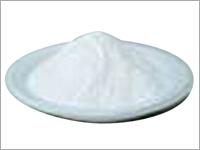
Appearance Fine,White to Creamy Powder Free Signs Impurity
Viscosity 1200mPas Min.
PH Value 6.5~8.0
Degree of Substitute 0.65~0.85
Loss on Drying 8.0% Max.
NaCl 1.2% Max.
120M Sieve Residue 10.0% Max.
Heavy Metals(Pb) 20ppm Max.
Arsenic 2ppm Max.
Iron 300 ppm Max.


Package: 25KG/Bag


Storage: Stored in a dry and cool place, keep away from strong light and heat.


Shelf life: Two years when stored properly in a well-closed container.


Versatile Functional Ingredient

Carboxy Methyl Cellulose stands out as a multifunctional additive across diverse industries. Its remarkable thickening, stabilizing, and binding properties make it vital for creating consistent textures in food, smooth finishes in textiles, and effective cleaning in detergents. With excellent water solubility and customizable viscosity, CMC offers tailored solutions for formulating advanced products and improving process efficiencies.


Superior Quality and Purity

Manufactured in India under strict standards, our CMC guarantees a minimum purity of 99% and a lead content below 2 ppm, ensuring safety for food, pharmaceutical, and industrial use. Each batch is packed in HDPE bags with inner lining to preserve its quality, and its stable shelf life of 24 months supports long-term storage. These features make it a reliable choice for high-stakes applications.


Application and Handling Made Simple

Designed as an easy-to-use powder, Carboxy Methyl Cellulose should be added gradually to the formulation under constant stirring to guarantee uniform dispersion and optimal performance. Its broad pH stability and moisture resistance allow seamless integration into existing manufacturing processes, while its bulk density enables efficient handling and measurement for industrial-scale operations.

FAQs of Carboxy Methyl Cellulose:


Q: How should Carboxy Methyl Cellulose be added to formulations for optimal results?

A: Carboxy Methyl Cellulose should be added gradually into water or the desired solution with continuous stirring. This method ensures uniform dispersion and prevents clumping, resulting in consistent thickening and stabilization within your formulation.

Q: What are the primary benefits of using Carboxy Methyl Cellulose in manufacturing?

A: When used as a thickener, stabilizer, or binder, Carboxy Methyl Cellulose enhances viscosity, improves texture, and ensures homogeneity in products across food, pharmaceutical, detergent, textile, and cosmetic applications. Its high purity and customizable viscosity also contribute to process versatility.

Q: Where is your Carboxy Methyl Cellulose manufactured and what is the origin of the product?

A: Our Carboxy Methyl Cellulose is manufactured and exported from India, ensuring adherence to international standards for industrial, food, and pharma-grade applications.

Q: When does Carboxy Methyl Cellulose begin to lose its efficacy?

A: The product retains its thickening and stabilizing effectiveness for up to 24 months from the date of manufacture when stored appropriately in a cool, dry environment away from moisture.

Q: What is the recommended storage condition for maintaining Carboxy Methyl Cellulose quality?

A: CMC should be stored in a cool, dry place, away from direct moisture, ideally in its original HDPE packaging with an inner lining to maintain its shelf life and prevent any contamination.

Q: How is Carboxy Methyl Cellulose produced?

A: Carboxy Methyl Cellulose is derived from natural cellulose through chemical modification, specifically carboxymethylation, resulting in a water-soluble polymer suitable for a range of industries.

Tell us about your requirement
product

Price:

Quantity
Select Unit

  • 50
  • 100
  • 200
  • 250
  • 500
  • 1000+
Additional detail
Mobile number

Email

More Products in Vitamins and Nutraceuticals Category

Betaine monohydrate(CAS No.590-47-6)

Betaine monohydrate(CAS No.590-47-6)

Dosage Form : Other, Powder, crystalline

Best Before : 5 years from manufacture

Shelf Life : 5 years

Flavor : Odorless, characteristic flavor

Dosage : As recommended

Purity : 98%

Sodium ascorbate,E301

Sodium ascorbate,E301

Dosage Form : Powder

Best Before : 24 months

Shelf Life : 24 months from date of manufacture

Flavor : Odorless, slight saline taste

Dosage : As per application need (typically 0.020.15%)

Purity : >99%

Vitamin K1(CAS No.84-80-0 )

Vitamin K1(CAS No.84-80-0 )

Dosage Form : Other, Powder and liquid form available

Best Before : 24 months from date of manufacturing

Shelf Life : 24 months

Flavor : Odorless and tasteless

Dosage : As prescribed by physician

Purity : 99% min

Sorbitol (CAS No.50-70-4) , E420 , D-glucitol , D-Sorbitol

Sorbitol (CAS No.50-70-4) , E420 , D-glucitol , D-Sorbitol

Dosage Form : Other, Powder / Granular / Liquid

Best Before : 24 Months from Manufacturing Date

Shelf Life : 24 Months

Flavor : Slightly Sweet / Odorless

Dosage : As per Formulation Requirements

Purity : 99% min